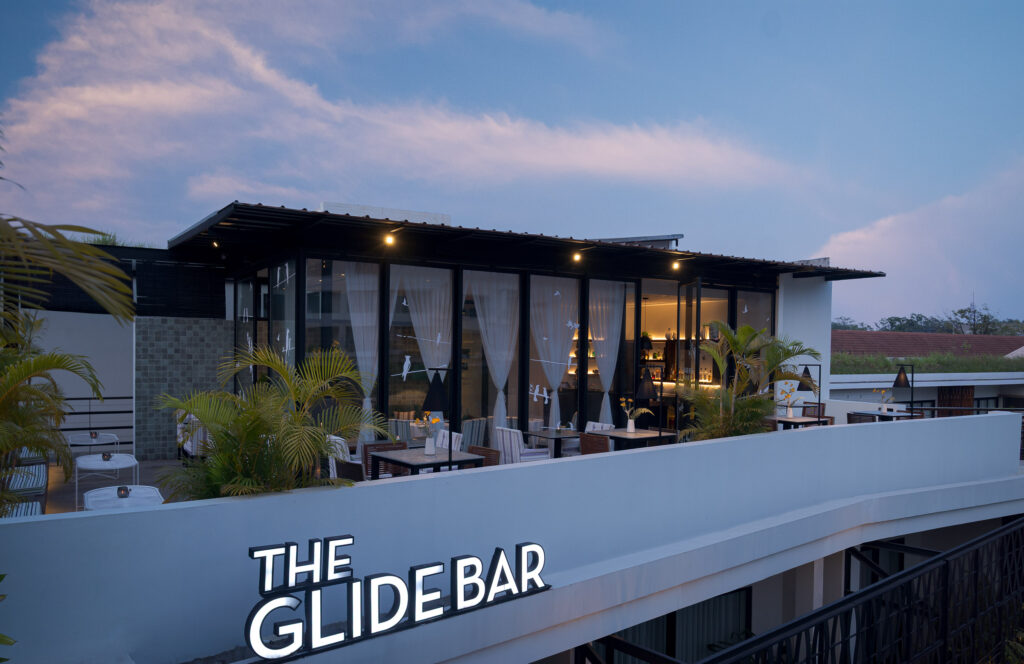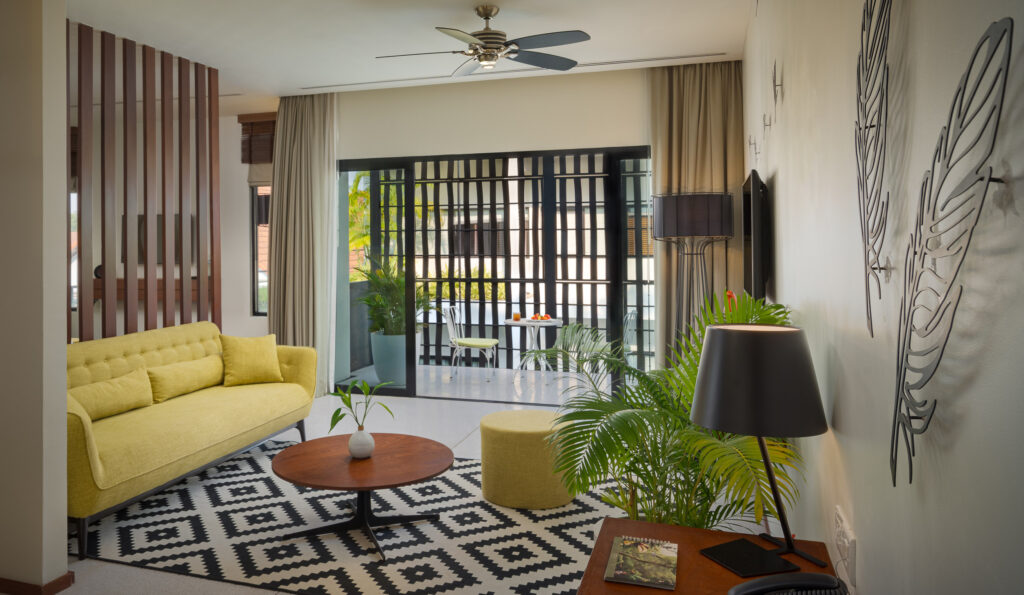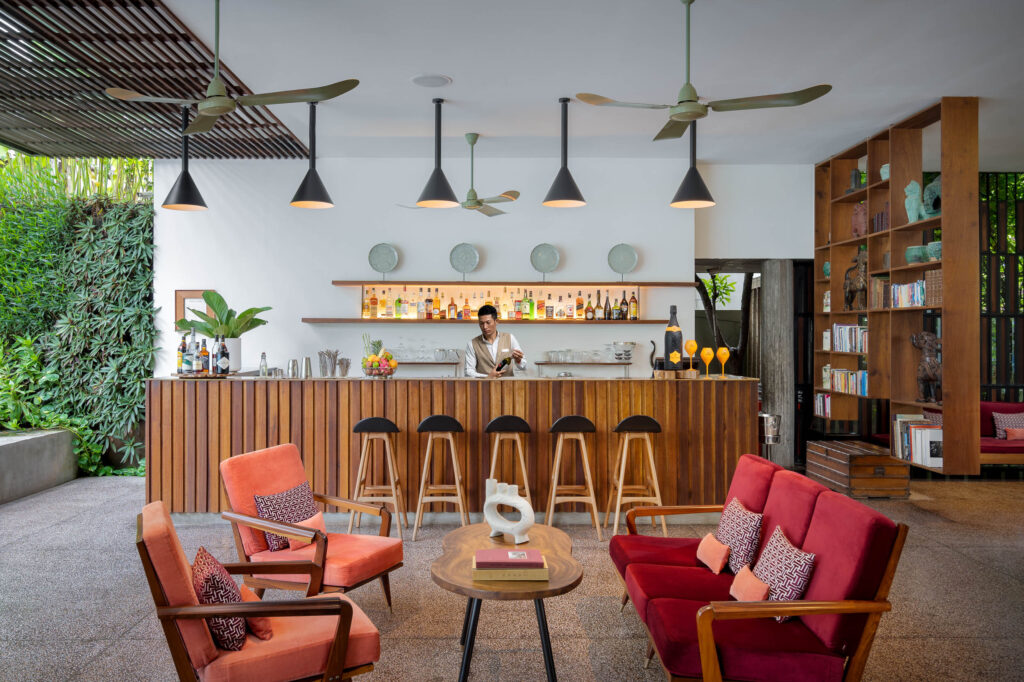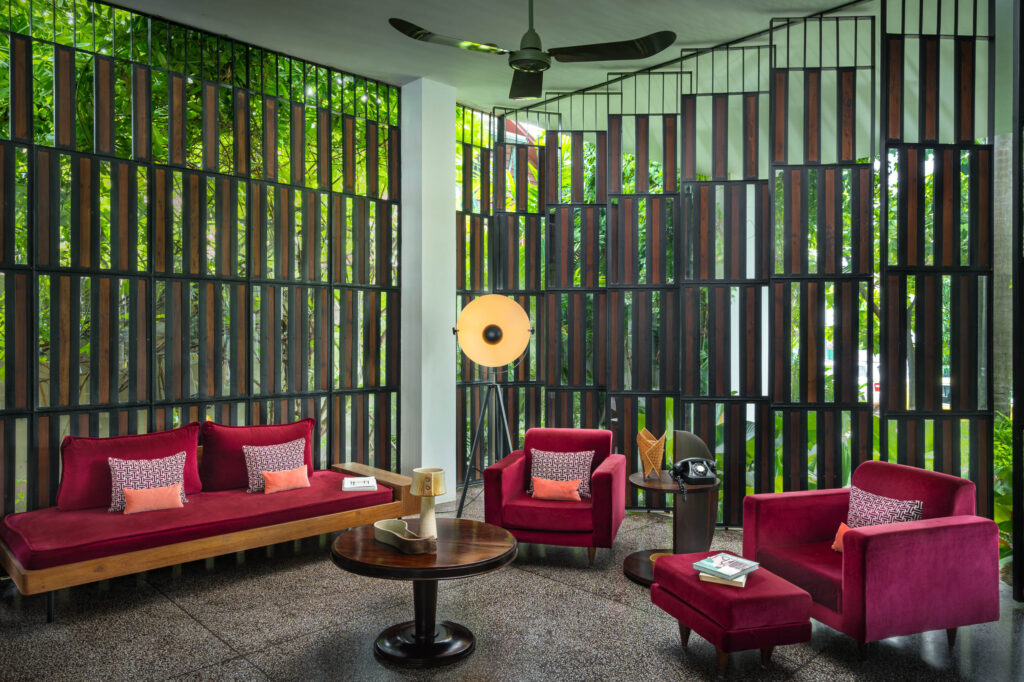
I’ve spent more than 10 years working as a commercial photographer in Cambodia, photographing hotels and resorts ranging from independent boutique properties to international hospitality brands. One thing I’ve seen repeatedly is how much the quality of a hotel’s photography affects sales.
When a guest searches for a hotel on Booking.com, Google or another booking platform, photography is often one of the first things they notice. Before they’ve compared every amenity or read every review, the images have already helped them decide which properties are worth a closer look – consciously or subconsciously.
This guide looks at how professional hotel photography can influence click-through rates, bookings and revenue, as well as practical ways hotels can use their images more effectively across their website and booking channels.
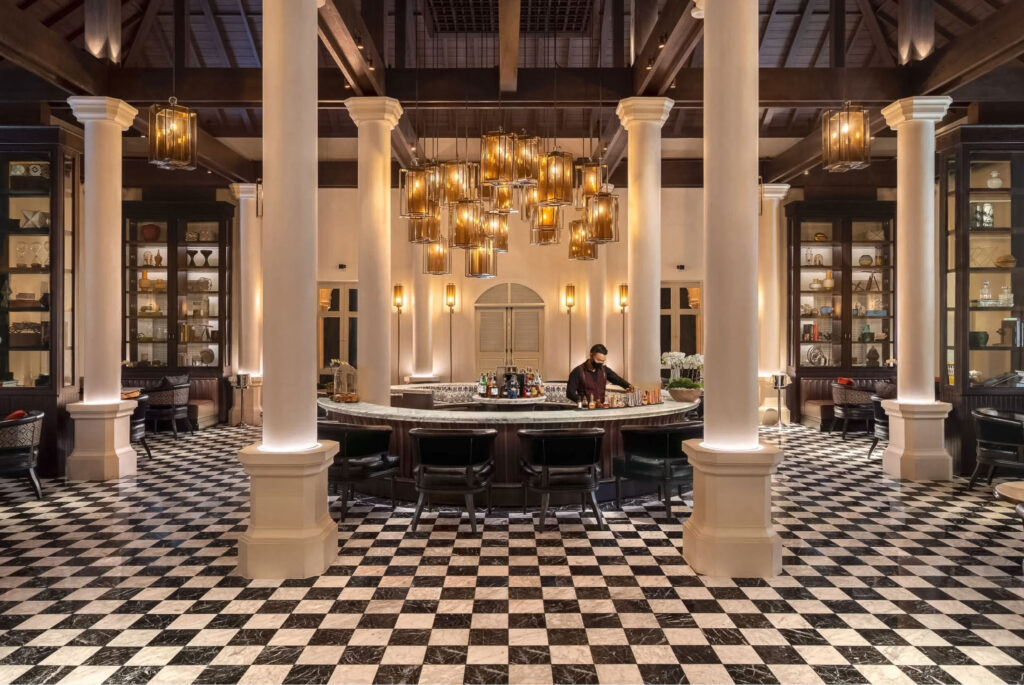
CTR (Click-Through Rate) is the percentage of people who click on your hotel after seeing it in search results.
For hotels, this applies across multiple platforms:
Booking.com listings
Google Hotel search results
Your own website
Even small changes in CTR can have a significant impact on bookings.
For example, if your hotel appears in search results 1,000 times:
A 2% CTR = 20 visitors
A 3% CTR = 30 visitors
That’s a 50% increase in traffic — without changing your ranking.
According to data from Google and Expedia Group, hotels with high-quality images receive significantly more engagement and booking interest compared to listings with fewer or lower-quality photos.
In simple terms:
Better images lead to more clicks — and more clicks lead to more bookings.
Not all professional photography performs equally.
There’s a big difference between images that simply look good and images that actually drive bookings.
High-performing hotel photography is created with how guests choose hotels online in mind.
There is evidence that the way hotel photography is presented can influence booking behaviour, not simply how attractive a website looks.
A 2020 study by Back, Park, Bufquin, Nutta and Lee, published in the International Journal of Hospitality Management, examined how hotel website photography affected 247 participants.
The researchers found that larger photographs increased the viewer’s sense of being mentally transported into the hotel experience. That increased immersion was associated with both greater booking intention and a greater willingness to pay.
The study also produced an interesting result regarding people in hotel photographs. Large photographs were most effective when no people were visible, while including people improved the effectiveness of smaller images. The researchers suggest that with a large, immersive photograph, viewers may find it easier to imagine themselves occupying the space when another person isn’t already occupying it.
A separate 2022 study by Lim and Jang, published in the Journal of Hospitality Marketing & Management, looked at the number of accommodation photographs, how they were organised, and the relationship between the first photograph and the listing headline.
It found that more photographs, better-organised photographs, and a lead image that was consistent with the headline all increased booking intention. Importantly, the results suggest that simply having a large collection of good photographs isn’t the whole story. How those photographs are selected and presented matters too.
For hotels, this has a practical implication. Photography shouldn’t be treated simply as a collection of attractive images to upload after a shoot. The hero image, image size, sequence and selection of photographs can all form part of the hotel’s sales strategy.
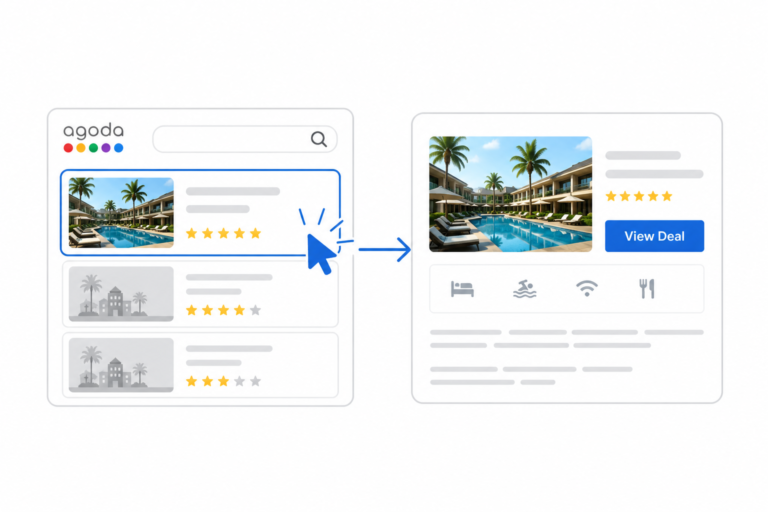
In my own hotel photography work, I think about the final use of the images while I’m shooting. A wide architectural photograph intended to introduce a property has a different job from a photograph showing breakfast, a detail in a guest room or people enjoying the pool. A strong hotel image library needs to show the property while also helping a potential guest imagine the experience of staying there.
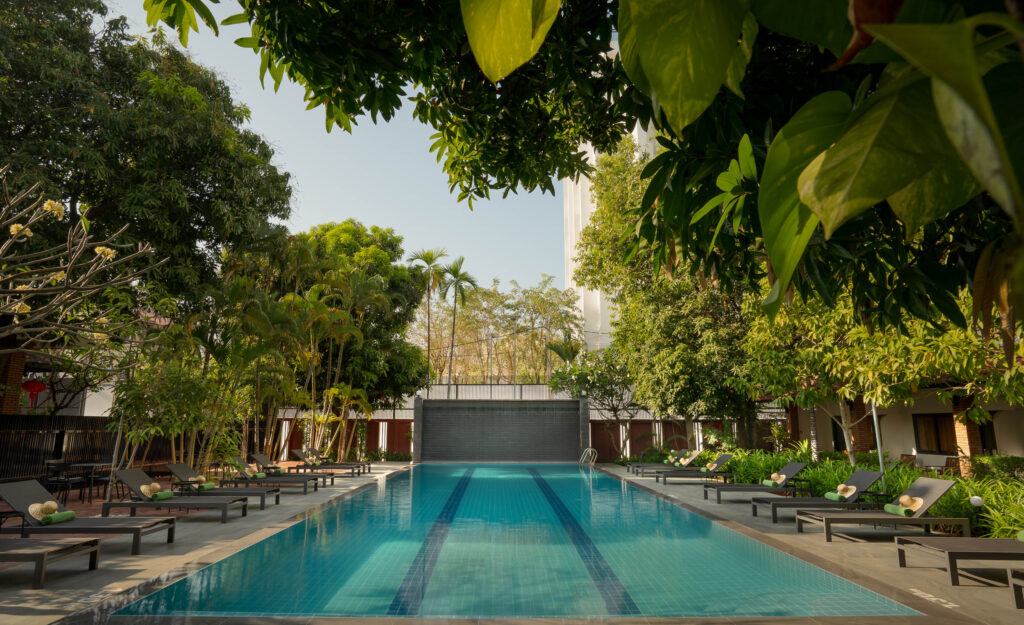
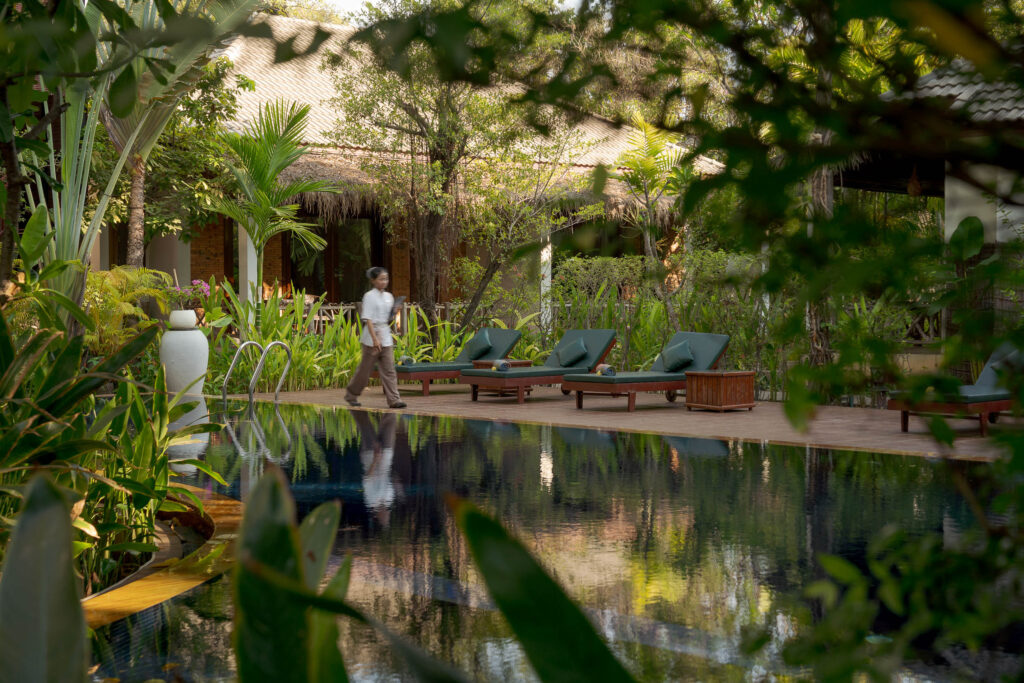
This large, uncrowded pool image reflects the research on immersion – view the Green Morodoc boutique hotel photography case study.
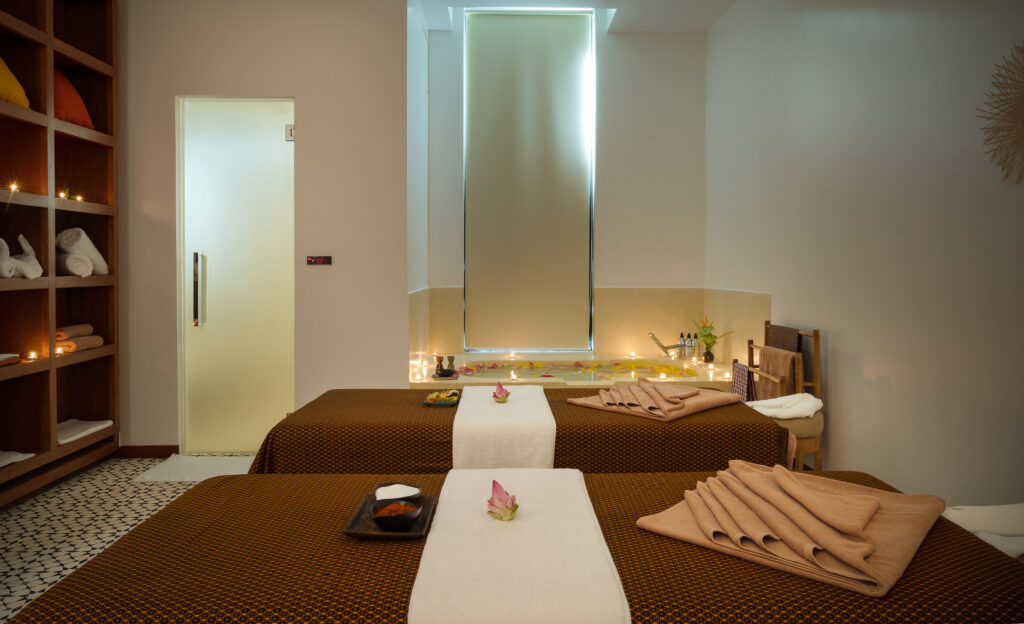
This wide shot of the treatment room at Waka Villa Boutique Hotel works as an establishing image, giving guests the full layout before they book, see the full Waka Villa Boutique Hotel photography case study
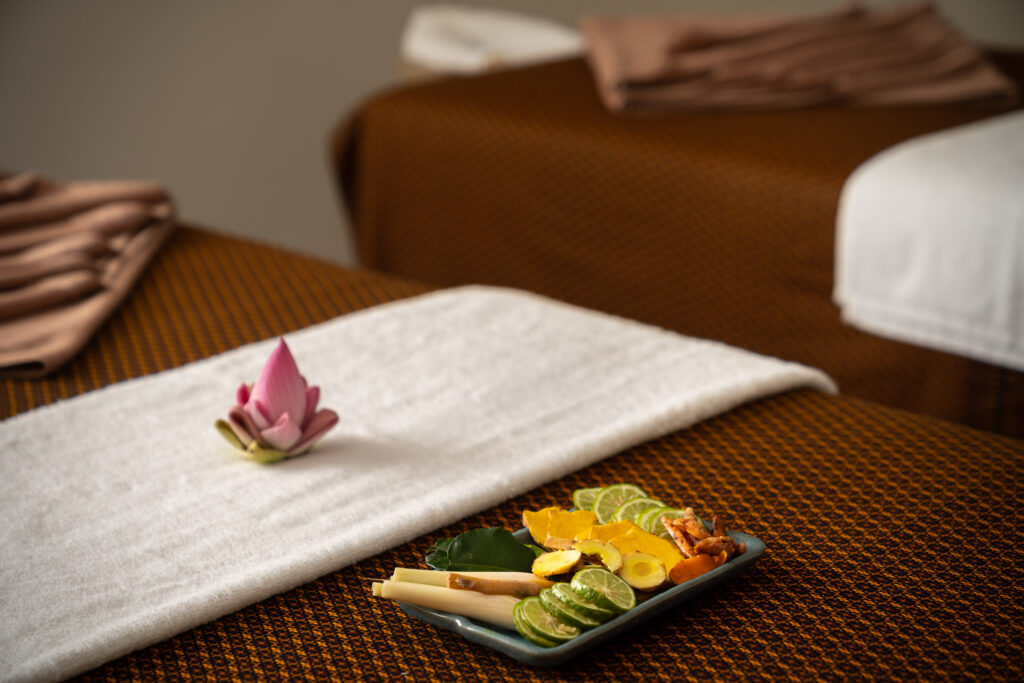
A closer detail shot like this does a different job to the wide image above it, showing guests what to expect once they’re there. Part of the same Waka Villa Boutique Hotel case study.
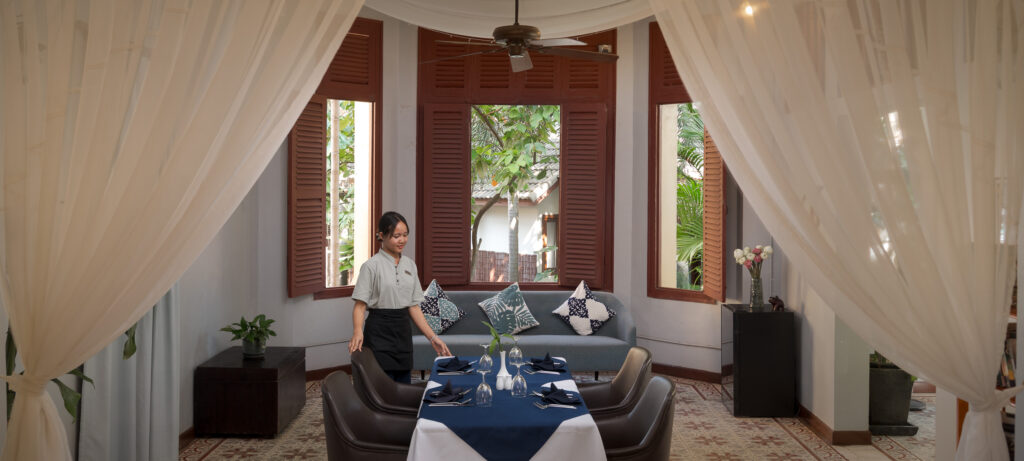
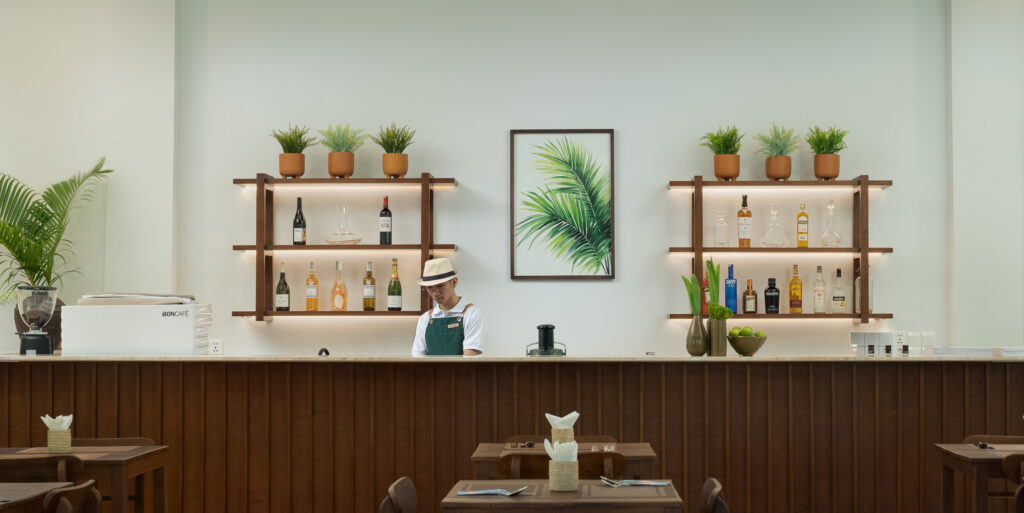
Dining facility photography, from a boutique hotel photography project in Siem Reap
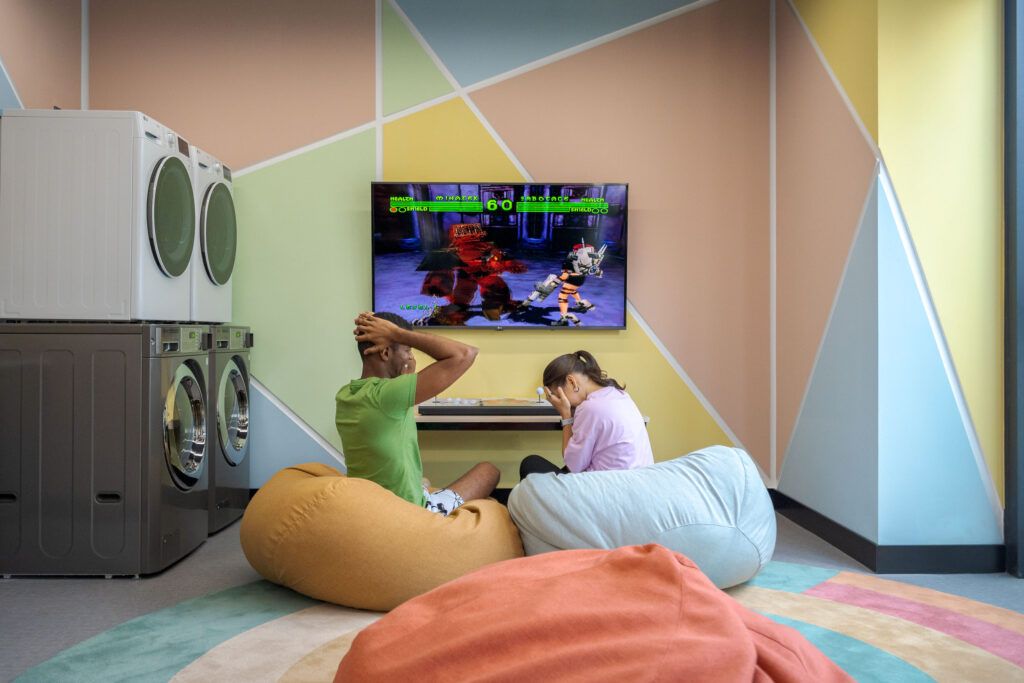
Hotel photography doesn’t just sit on your website — it influences performance across every stage of the booking journey.
On Booking.com, your hotel appears alongside dozens of competitors.
Guests scroll quickly, often making decisions in seconds.
Your first image (hero image) determines:
Whether someone clicks your listing
Whether they shortlist your hotel
Whether they compare you seriously
Strong, clear photography helps your hotel stand out instantly and compete beyond price.
On Google and Google Hotels, images are often shown before users even visit your website.
This means your photography shapes the first impression immediately.
High-quality images:
Build trust at a glance
Increase the likelihood of a click
Influence how premium your hotel appears
Once a guest clicks through to your website, photography plays an even bigger role.
It determines:
Whether they stay on the page
Whether they trust your brand
Whether they book directly or return to an OTA
This is where photography and website design work together.
Clear, well-structured visuals combined with a strong website experience can significantly improve direct bookings and reduce reliance on third-party platforms.
Images should feel bright, inviting, and realistic.
Overly dark or heavily stylised photos may look artistic, but they often perform poorly on booking platforms where clarity and trust are key.
Your first image is the most important.
It needs to:
Stand out immediately in search results
Represent the best aspect of your hotel
Create an emotional connection
This single image often determines whether a guest clicks or scrolls past.
Guests want to understand exactly what they are booking.
Strong images clearly show:
Room size
Layout and flow
Key features and amenities
This reduces uncertainty and increases booking confidence.
A hotel is more than its rooms and facilities. Photos that include staff in action, checking in a guest, preparing a table, greeting someone at reception, help potential guests picture the level of service they’ll receive, not just the space they’ll be staying in.
This kind of image builds trust in a different way to an empty room shot. It signals that the property is active, well run, and genuinely hospitable.
A consistent set of images builds trust.
When lighting, colour, and style are aligned across all photos, your hotel feels more professional and reliable.
Hotel photography needs to work across:
Booking.com
Mobile devices
Your own website
Images should be clear, well-composed, and easy to understand even on smaller screens.
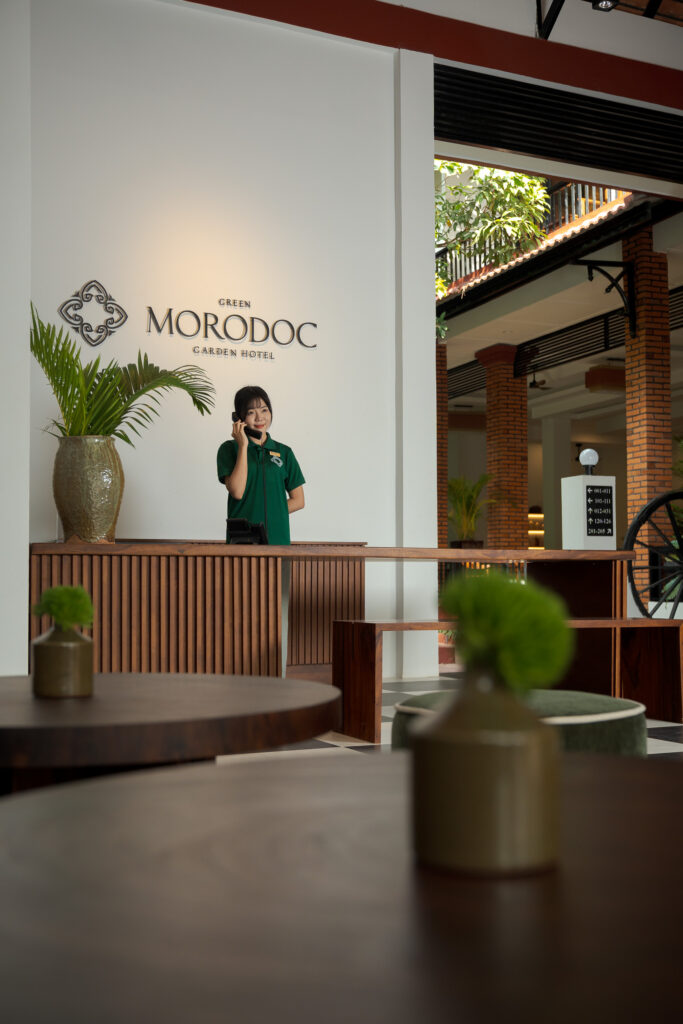
Capturing staff is a great way to show the personality of your hotel. See how this was approached in the full Green Morodoc Garden Hotel photography case study.
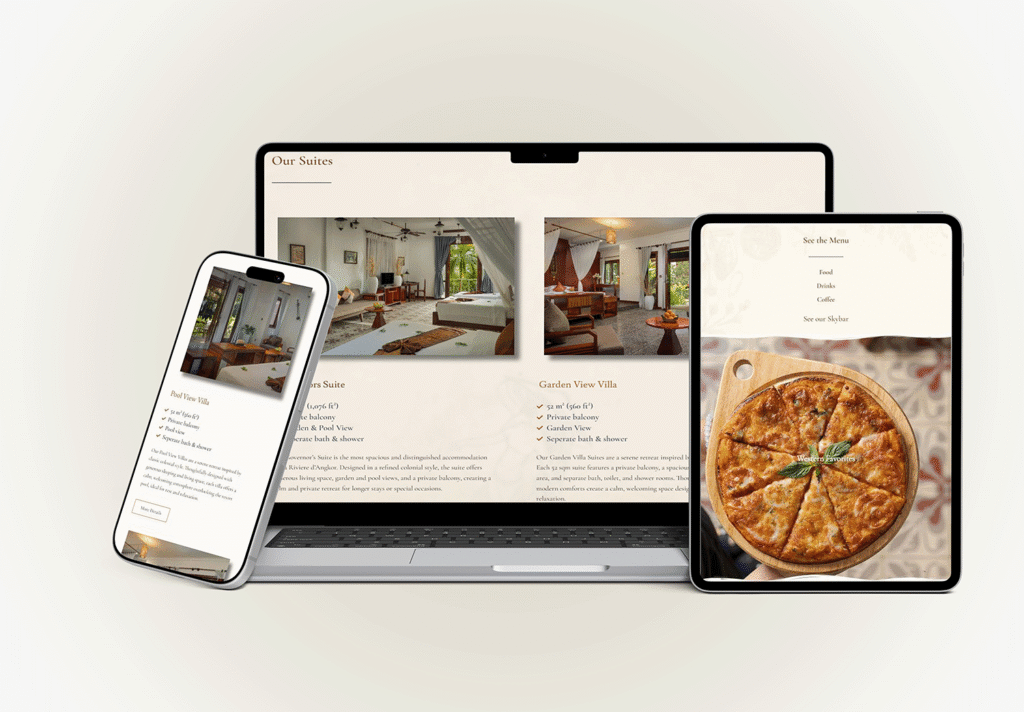
Even excellent hotel photography can lose its impact if it is poorly presented on the hotel website.
Large hero images can immediately communicate the character of a property, while carefully selected photographs throughout the site help guests understand the rooms, facilities, dining and overall experience. The layout should give important images enough space rather than squeezing dozens of photographs into galleries that visitors may never explore.
Mobile presentation is particularly important. Images that work beautifully across a desktop screen may need different crops or positioning on a phone. Hotels should check important photographs across different screen sizes rather than assuming the desktop layout will translate effectively.
Image optimisation matters too. Large photography files can slow a website considerably, so images should be properly resized and compressed for the web while retaining enough quality to represent the property well.
Photography and web design should ultimately work towards the same goal: helping potential guests understand the property, trust what they are seeing and move towards making a booking.
For hotels, direct bookings are particularly valuable because they reduce reliance on OTA commissions. The quality, ease of use and design of the hotel website can influence whether a potential guest books directly or returns to an OTA.
The impact of hotel photography isn’t just visual – it’s measurable.
Even small improvements in how your hotel is presented can lead to significant increases in bookings.
Guests don’t just book based on price — they book based on perceived value.
High-quality photography allows hotels to:
Present themselves as more premium
Attract higher-quality guests
Justify higher room rates
Two hotels with similar pricing can perform very differently depending on how they are presented visually.
When your images are working effectively across your website and marketing:
More guests trust your brand
More guests book direct
Less reliance on third-party platforms
This leads to higher margins and more control over your bookings.
While the principles above apply to hotels anywhere in the world, the impact can be seen clearly in real projects.
In this boutique hotel photography project, the focus was on creating images that would perform across booking platforms and the hotel’s own website.
Viroth’s Hotel – Boutique Hotel Photography Case Study
The approach included:
Highlighting the hotel’s unique design and atmosphere
Creating strong hero images for listing platforms
Producing a consistent set of visuals across all spaces
Ensuring clarity and usability across mobile and desktop
The goal was not just to create visually appealing images, but to produce photography that works in real booking environments – where guests are comparing multiple hotels quickly.
The way guests choose hotels has changed.
Today, most booking decisions happen online — often within seconds.
Guests are:
Comparing multiple hotels at once
Scanning images quickly before reading details
Making decisions based on visual impression first
In this environment, photography is no longer just part of your marketing — it is one of the main drivers of performance.
Hotels with strong, clear, well-structured imagery:
Attract more attention in search results
Generate more clicks
Convert more visitors into bookings
This applies whether your hotel is a boutique property, a resort, or part of a larger brand.
Effective hotel photography is not just about creating beautiful images — it’s about understanding how those images are used across booking platforms, websites, and marketing channels.
My approach focuses on:
Creating images that improve click-through rates
Supporting both OTA performance and direct bookings
Delivering photography that works across real-world booking environments
If you’re looking to improve how your hotel performs online, you can learn more here:
Or get in touch to discuss your project.
See a boutique hotel photography example in this boutique hotel photography case study.
See a resort photography example in this resort photography case study.
View this business hotel photography case study showcasing the Hyatt Regency, Phnom Penh.
See a modern city hotel case study showcasing Capri by Fraser, Phnom Penh.