Hotel Photography That Actually Drives Bookings
Most hotels think they need “nice photos.”
What they actually need are images that convert browsers into bookings.
Because in today’s booking journey, photography isn’t just part of your marketing. It is your marketing.
Before a guest reads your description, checks your reviews, or compares your rates, they’ve already made a decision based on what they see.
And increasingly, that decision is emotional.
What the Research Says About Hotel Images
Recent research into hotel booking behaviour shows something important:
Images don’t just show a space. They shape perception, emotion, and ultimately, booking decisions.
Studies analysing hotel images using AI found that four key visual factors directly influence whether a guest is more likely to book:
- Time of day / lighting
- Colour and atmosphere
- Human presence (lifestyle moments)
- Camera angle and composition
This is a big shift.
It means hotel photography isn’t just about documenting rooms. It’s about engineering perception.
At the same time, broader industry data shows:
- Professional images can increase click-through rates by over 60%
- Booking engagement can increase dramatically with better visuals
- Hotels with strong imagery consistently outperform those without
So the question isn’t whether photography matters.
It’s whether your current images are working hard enough.
Guests Don’t Book Rooms. They Book a Feeling.
This is where most hotel photography falls short.
A technically correct image of a room is not enough.
Guests aren’t asking:
- “What does the room look like?”
They’re asking:
- “What will it feel like to stay here?”
That’s why emotional, atmospheric photography consistently performs better.
Images that feel warm, calm, aspirational, or indulgent help guests imagine themselves in the space. And that emotional connection is what drives action.
Research and industry insights both point to the same conclusion:
People respond to images emotionally first, rationally second.
If your photos don’t create that emotional response, you’re losing bookings before price even becomes a factor.
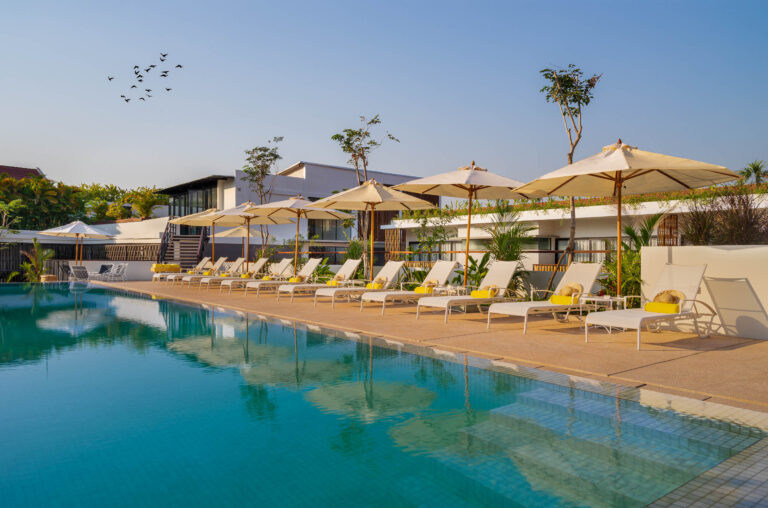
Timing Is Everything (And Most Hotels Get It Wrong)
One of the most overlooked factors in hotel photography is timing.
The same space can feel completely different depending on when it’s shot.
- Midday light can look flat and harsh
- Early morning can feel calm and exclusive
- Golden hour adds warmth and atmosphere
- Evening lighting can feel intimate and luxurious
This aligns directly with the research around light and time of day being one of the strongest drivers of booking perception
But most shoots are scheduled based on convenience, not outcome.
Which means:
You end up with images that are accurate… but not compelling.
Why “Standard Hotel Photography” Doesn’t Convert
A lot of hotel photography still follows a checklist approach:
- Wide shot of the room
- Bathroom
- Pool
- Restaurant
Everything is covered. Nothing stands out.
The result is what you see across most OTAs:
Technically correct images that feel empty.
The problem is, these images don’t differentiate your property.
And in competitive markets, especially boutique and luxury, that’s critical.
Because guests are not comparing facts.
They’re comparing how each option makes them feel.
The Real Job of Hotel Photography
When done properly, hotel photography should do three things:
1. Capture attention (click-through)
Strong visuals increase visibility and engagement across search results and OTAs.
2. Build trust (conversion)
Clear, high-quality, intentional images signal professionalism and reduce hesitation.
3. Sell the experience (booking decision)
Emotion-driven imagery helps guests imagine their stay, which drives bookings.
This is why photography has such a direct impact on performance:
Guests book faster when they can clearly see and feel the experience
Where Most Hotels Lose Revenue (Without Realising It)
Poor or generic photography doesn’t just look bad.
It costs money.
- Lower click-through rates
- Lower direct bookings
- More reliance on OTAs
- Reduced perceived value (and lower room rates)
In contrast, strong visual content can:
- Improve conversion rates
- Increase time spent on your website
- Support higher pricing for premium properties
For boutique and luxury hotels especially, photography isn’t a visual asset.
It’s a revenue driver.
See my hotel photography work.
A More Strategic Approach to Hotel Photography
The difference comes down to intent.
Instead of asking:
“What photos do we need?”
The better question is:
“What do our guests need to feel in order to book?”
From there, everything follows:
- Shooting at the right time of day
- Creating atmosphere, not just documentation
- Including subtle human presence where needed
- Composing images for web, OTA, and mobile viewing
- Thinking about how images sit inside your booking journey
Why This Matters More Than Ever
Today, your images are not just on your website.
They’re everywhere:
- Google search results
- Booking.com / Expedia listings
- Social media
- Meta ads
- Email campaigns
And in every one of those places, they are doing the same job:
Convincing someone to click, stay, and book.
Final Thought
Most hotels invest in photography as a one-off task.
The ones that perform best treat it as part of their marketing strategy.
Because the reality is simple:
Your images are your first impression, your strongest sales tool, and your most scalable marketing asset.
A Quick Note on My Approach
I work specifically with hotels, so my focus isn’t just on creating images that look good, but images that perform.
That means:
- Understanding how guests browse and book
- Knowing what works across OTAs vs websites
- Shooting with conversion and layout in mind
- Aligning visuals with your positioning, whether boutique or luxury
I also work as a hotel website designer, so I see first-hand how imagery impacts click-through rates, user behavior, and booking conversions.
And that combination tends to change how a shoot is planned, not just how it’s executed.